

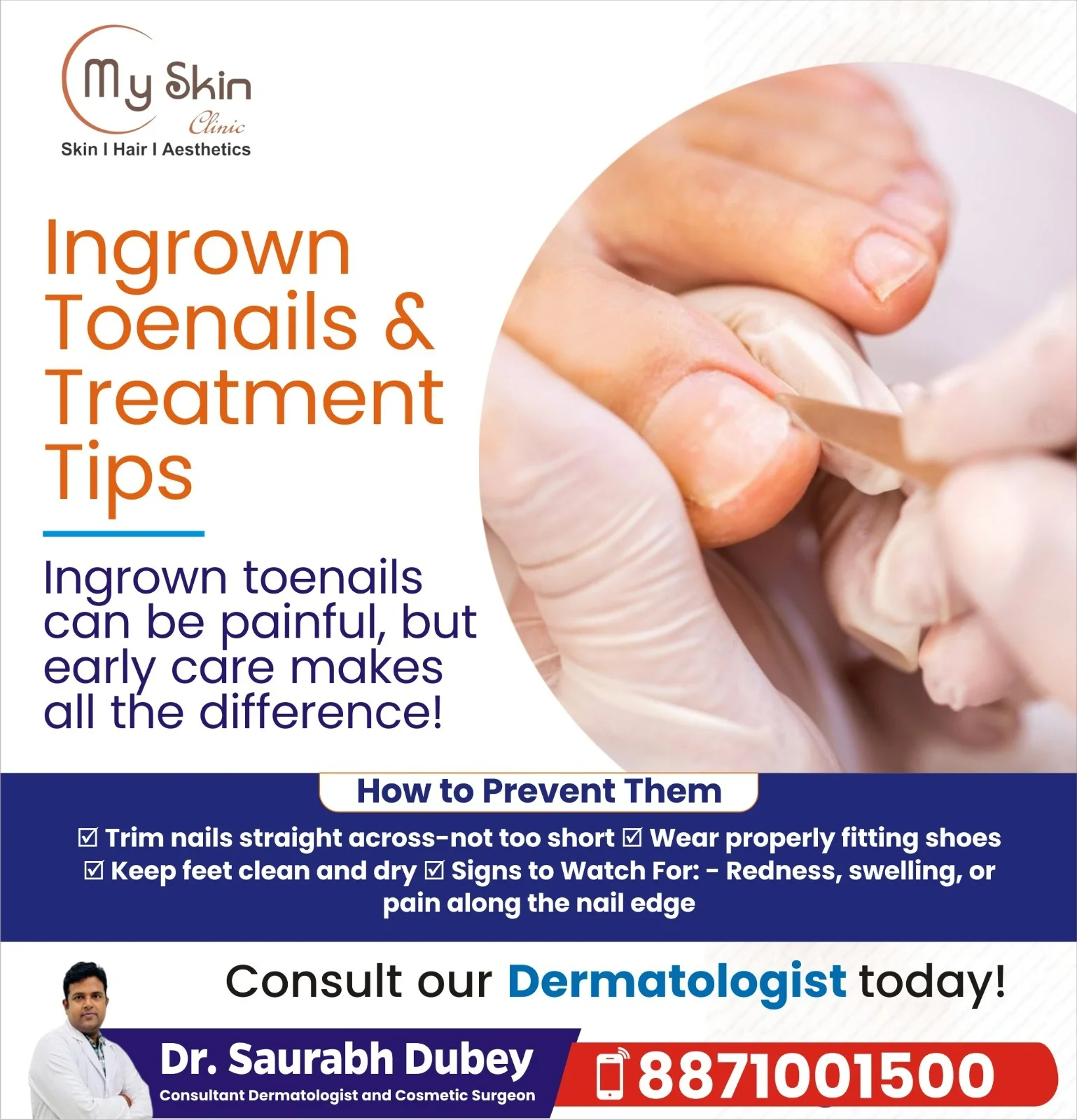
A tender spot beside a toenail can make everyday footwear uncomfortable. What begins as slight irritation may gradually affect walking, exercising, or standing at work. Repeatedly cutting the painful corner might seem like an easy solution, but it can leave the area more irritated.
Ingrown Toenail Treatment in Indore begins with assessing the nail edge, surrounding skin, and severity of symptoms. Mild problems may respond to conservative care, while persistent or recurring cases may need a procedure. The appropriate approach depends on the examination and your overall health.
At My Skin Clinic, Dr. Saurabh Dubey offers dermatology consultations for skin and nail concerns. Getting a painful toenail examined can help clarify what is happening and how to manage it appropriately.
What Is an Ingrown Toenail?
An ingrown toenail develops when the side or corner of a nail presses into or grows into the neighbouring skin. It commonly affects the big toe, although other toes can be involved.
The affected area may become tender, swollen, or inflamed. Sometimes an infection develops around the nail edge. These changes can make pressure from socks, shoes, or even bedding uncomfortable.
Not every painful nail has the same cause. An examination is useful when the problem persists, particularly if there is discharge, injury, or a change in nail appearance.
Early Signs Worth Paying Attention To
Symptoms often start along one side of the nail. You might first notice discomfort when putting on shoes or touching the toe.
Common ingrown toenail symptoms include:
Severe pain, spreading inflammation, or pus should prompt medical attention. People with diabetes or poor circulation have a greater risk of complications and should seek advice early.
When describing symptoms, explain whether they are improving, staying unchanged, or becoming worse. The direction of change helps make the consultation more informative.
Why Do Toenails Become Ingrown?
Several factors can contribute, including trimming habits, pressure from footwear, injury, and the natural shape of the nail. Sometimes more than one factor is involved.
Cutting Into the Corners
Trying to create a deeply rounded nail shape or removing too much from the sides can encourage problems as the nail grows. For routine prevention, toenails should generally be trimmed straight across rather than shaped like fingernails.
Footwear That Crowds the Toes
Shoes that squeeze the front of the foot can aggravate pressure around a sensitive nail. Consider how your footwear feels during a full day, including work, commuting, and exercise.
Injury or Repeated Irritation
A previous knock to the toe or recurring pressure may be relevant. Mention sports, occupational footwear, or an injury when discussing painful toenail treatment.
Understanding these details can help your clinician address contributing factors alongside the immediate problem.
What Can You Do for a Mild Ingrown Toenail?
For an otherwise healthy person with mild symptoms and no signs of infection, conservative measures may help ease discomfort. Warm-water soaking, drying the foot afterwards, and wearing roomy footwear are commonly advised.
Avoid picking at the toe or cutting down into the painful side. If symptoms fail to improve or become worse, arrange an examination rather than continuing home treatment indefinitely.
Do not attempt to dig out the nail with scissors, needles, or salon tools. A painful embedded edge needs careful assessment.
If you have diabetes, reduced sensation, or poor circulation, seek professional advice instead of attempting to treat the nail yourself.
When Should You See a Dermatologist?
Consider consulting a dermatologist in Indore when pain affects walking, the same nail repeatedly becomes ingrown, or simple care has not helped.
Arrange prompt assessment if there is pus, increasing swelling, or spreading redness. Fever or feeling hot and shivery alongside an infected-looking toe requires urgent medical advice.
At your appointment, explain:
Photographs taken when symptoms were more visible may also help you explain the history, but they do not replace examination.
What Treatment Options May Be Discussed?
Conservative Management
For a less severe case, a clinician may recommend measures to reduce pressure and allow the nail edge to grow away from irritated skin. In selected cases, professional lifting, taping, or splinting techniques may be considered.
These approaches should be explained and demonstrated where appropriate rather than improvised at home.
Assessment for Infection
Redness alone does not determine whether antibiotics are needed. If infection is suspected, the doctor will assess the area and decide on appropriate treatment.
Avoid using leftover antibiotics or assuming that medication alone will resolve an embedded nail edge. Ask what each prescribed treatment is intended to address.
Partial Nail Removal
For more troublesome cases, treatment may involve removing the section of nail causing the problem. Nail procedures are commonly performed using local anaesthesia to numb the toe.
For recurring problems, treatment of the corresponding nail root may be considered to reduce regrowth of the troublesome section. Removing the whole nail is not necessary in every case.
When discussing ingrown toenail removal in Indore, ask why the proposed procedure suits your case, what it involves, and what aftercare will be required.
Planning Recovery After a Nail Procedure
Before agreeing to treatment, discuss your daily responsibilities. Someone who works at a desk may have different practical concerns from someone who spends the day standing in closed footwear.
Ask your clinician:
Recovery varies with the procedure and individual health. Obtain instructions specific to your treatment rather than relying on another person’s experience.
Keep the follow-up appointment and contact the clinic if you are unsure about the wound’s appearance or progress.
Habits That Help Reduce Recurrence
Trim Straight Across
For routine nail care, use appropriate clippers and avoid digging into the corners. Smooth rough edges carefully and leave the cuticles intact. If a nail is already painful or embedded, get advice before trying to reshape it.
Choose Comfortable Shoes
Look for enough room around the toes and avoid footwear that presses directly on the nail. Check both everyday shoes and those used for exercise.
Keep Feet Clean and Dry
Regular foot hygiene and changing out of damp socks support sensible nail care. Inspect a toe that has previously caused trouble rather than waiting until footwear becomes painful again.
Get Help When Trimming Is Difficult
Thickened nails, limited mobility, poor eyesight, or reduced sensation can make self-care harder. Ask a healthcare professional about suitable assistance instead of forcing clippers into an awkward position.
For nail care in Indore, prevention advice should fit your circumstances and any underlying health conditions.
Frequently Asked Questions
1. Does every ingrown toenail need surgery?
No. Mild cases may be managed conservatively. Persistent, severe, or recurring problems may need a nail procedure after assessment. The choice depends on the condition of the nail and surrounding skin.
2. Can an ingrown toenail return after treatment?
Yes, recurrence is possible. Ask whether nail shape, footwear, or trimming habits contributed and whether a procedure addressing the troublesome nail root is appropriate for repeated episodes.
3. Is a pedicure suitable for a painful, swollen nail?
A painful, swollen, or discharging nail should be medically assessed. Avoid asking salon staff to cut deeply into the side or remove an embedded section.
4. What should someone with diabetes do?
Arrange an early medical review and avoid attempting nail removal at home. Diabetes and circulation problems can increase the risk of complications, so even a seemingly small toe problem deserves attention.
Take the Next Step Towards Comfortable Walking
A recurring sore nail does not have to remain part of your daily routine. Understanding the cause, choosing appropriate treatment, and improving nail-care habits can help you manage the problem more confidently.
Consult Dr. Saurabh Dubey at My Skin Clinic for Ingrown Toenail Treatment in Indore. Discuss your symptoms, previous episodes, and the care options suitable for your needs.
Contact Us today to book your dermatology consultation.
| Tags: | #Ingrown Toenail Treatment in Indore |


